Ukrainian farmers support Ukraine's accession to the European Union; however, European integration must not turn into a process in which producers only receive new requirements without adequate support. This was stated by the Deputy Chairman of the Ukrainian Agri Council, Denys Marchuk, during a discussion on the prospects for integrating the Ukrainian agricultural sector into the EU.
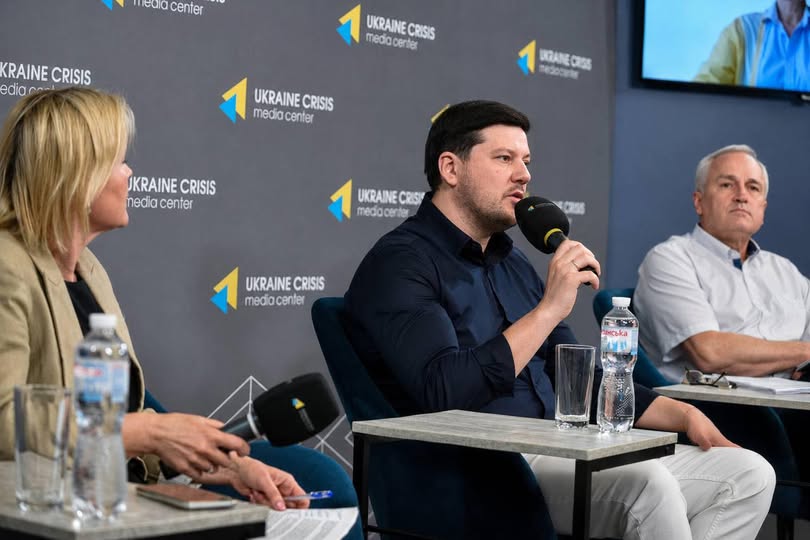
According to him, the UAC, which brings together more than 1,400 enterprises across Ukraine, has been engaged in dialogue with producers for several years now regarding their vision of the future on the EU market. At the same time, the war significantly complicates the process of adapting to European requirements.
"We do not object to European rules. On the contrary, we understand that this is our path, but we insist: the agricultural sector must receive a 10-year transition period after Ukraine's accession to the European Union. Not now, when there is not even a set membership date, but specifically from the moment of accession. Otherwise, producers will bear the costs already today without having access to the opportunities that farmers in EU countries enjoy," Denys Marchuk noted.
He reported that during recent meetings in Brussels, representatives of the UAC and other agricultural associations presented their European partners with the Ukrainian agricultural sector's key proposals regarding the negotiation process. These concern not only the need for a transition period but also Ukrainian farmers' access to support instruments under the EU's Common Agricultural Policy, as well as to structural funds that could be directed toward developing processing, energy efficiency, and the modernization of production.
Separately, the UAC Deputy Chairman emphasized the need to ensure full access for Ukrainian products to the European market.
"If we take on the obligation to meet all European requirements — regarding product safety, plant protection, and production traceability — then we must also have access to the support instruments that work for EU farmers. Today, European producers receive per-hectare subsidies under the Common Agricultural Policy, whereas the Ukrainian farmer has no such support. And, of course, compliance with the rules must be accompanied by full liberalization of access for Ukrainian products to the European market," Denys Marchuk stressed.
According to him, the European Union remains one of the key markets for Ukrainian farmers. In particular, EU countries purchase around 50% of Ukrainian corn exports, and the introduction of duty-free trade and the "solidarity lanes" in 2022 gave a powerful boost to the development of value-added product exports. Ukrainian producers began entering the shelves of European retail chains more actively and finding new partners on the EU market.
At the same time, Marchuk warned against political decisions that restrict trade in Ukrainian products.
"It cannot be the case that Ukraine meets all EU requirements but at the same time faces new restrictions on the market. We are already seeing the consequences of such an approach: while in 2024 the agricultural trade turnover between Ukraine and the EU exceeded EUR 17 billion, in 2025 it shrank to EUR 15.2 billion. European integration must be a two-way process: not only new obligations for Ukrainian producers, but also support and an open market," he emphasized.
Denys Marchuk also drew attention to the war's impact on the competitiveness of the Ukrainian agricultural sector. Due to constant attacks on port infrastructure, logistics costs and insurance risks are rising, which directly affects the cost of production and producers' incomes. According to him, without taking these factors into account, it will be difficult to speak of equal conditions for adapting Ukrainian farmers to EU requirements.
Thursday, 11 June 2026