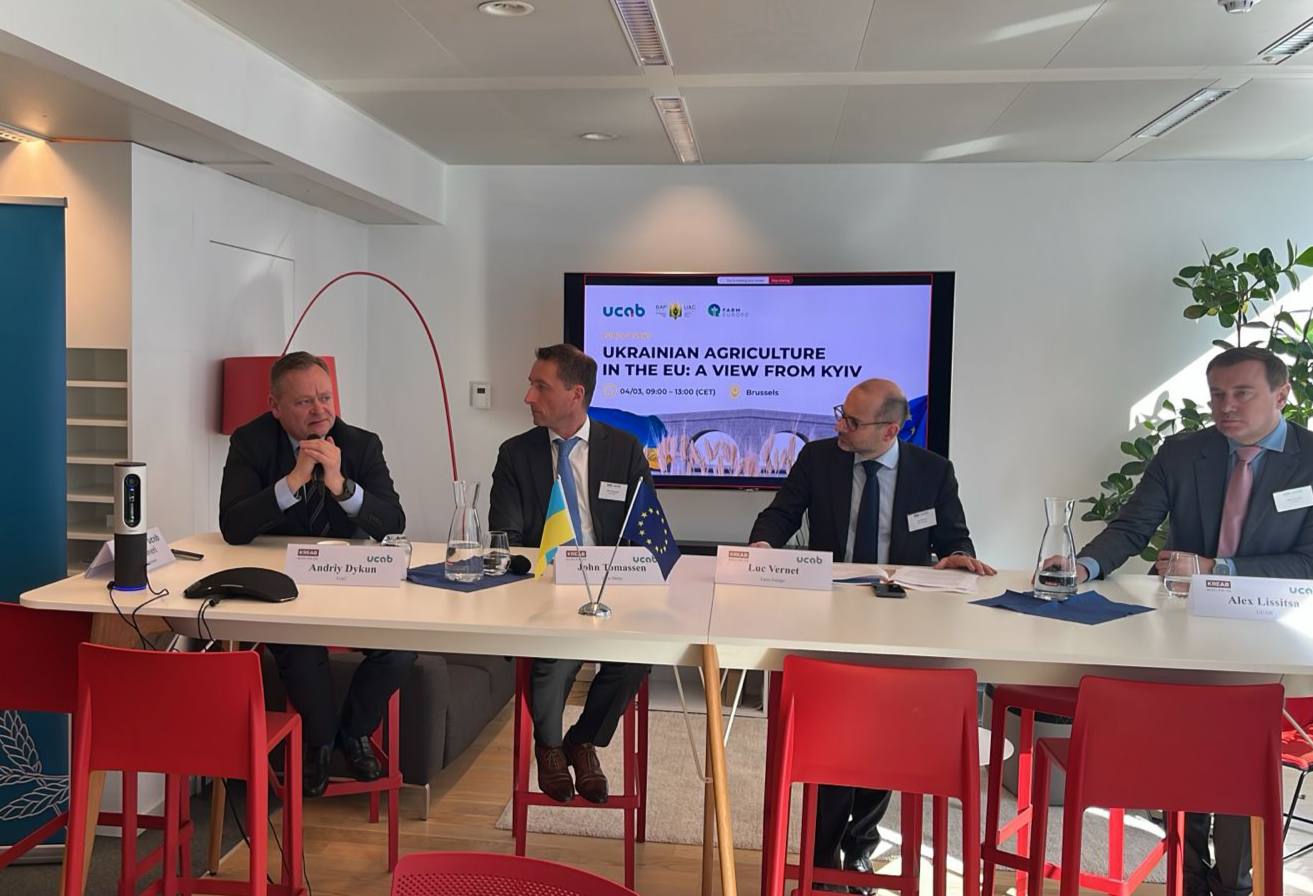
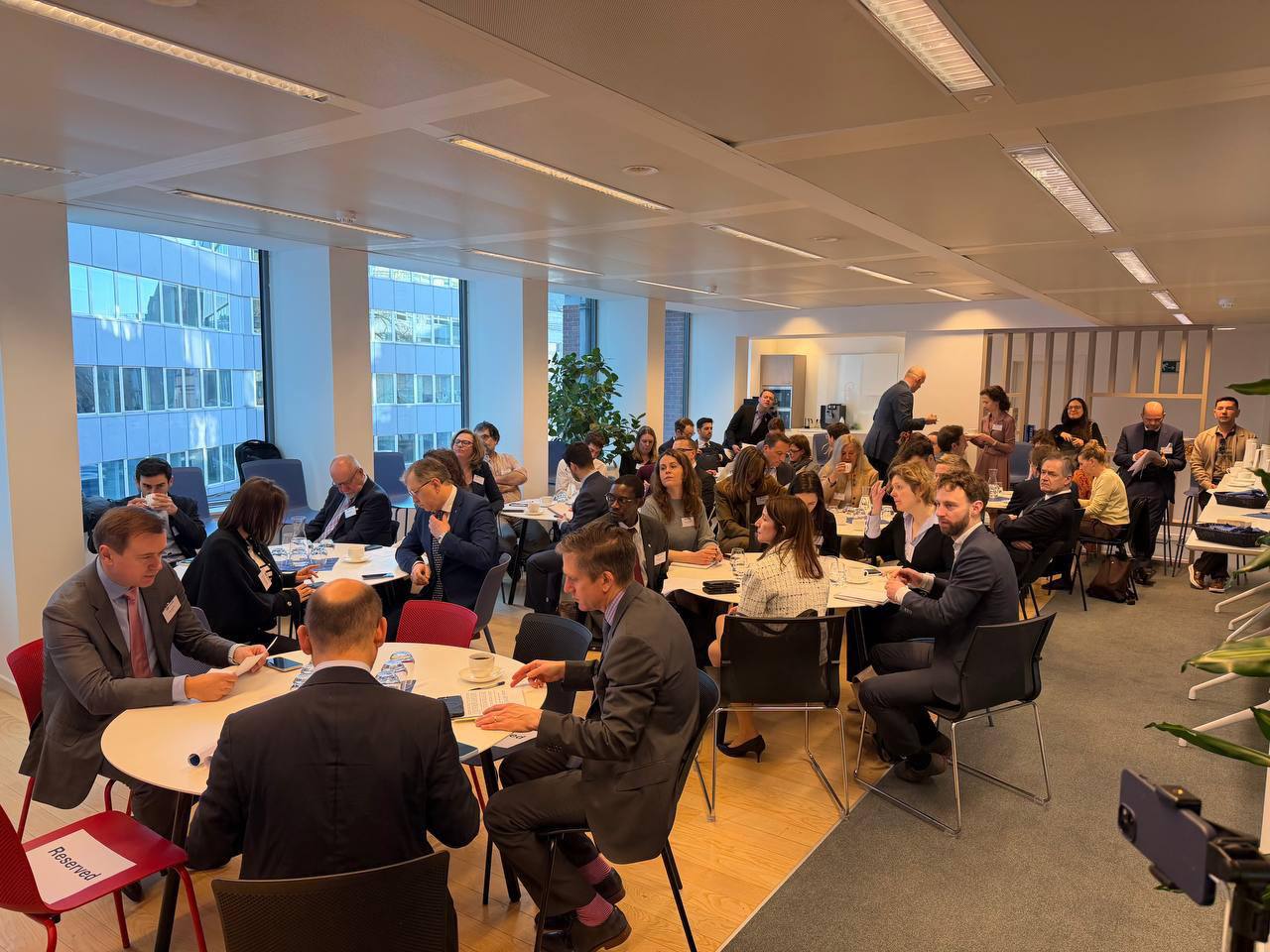
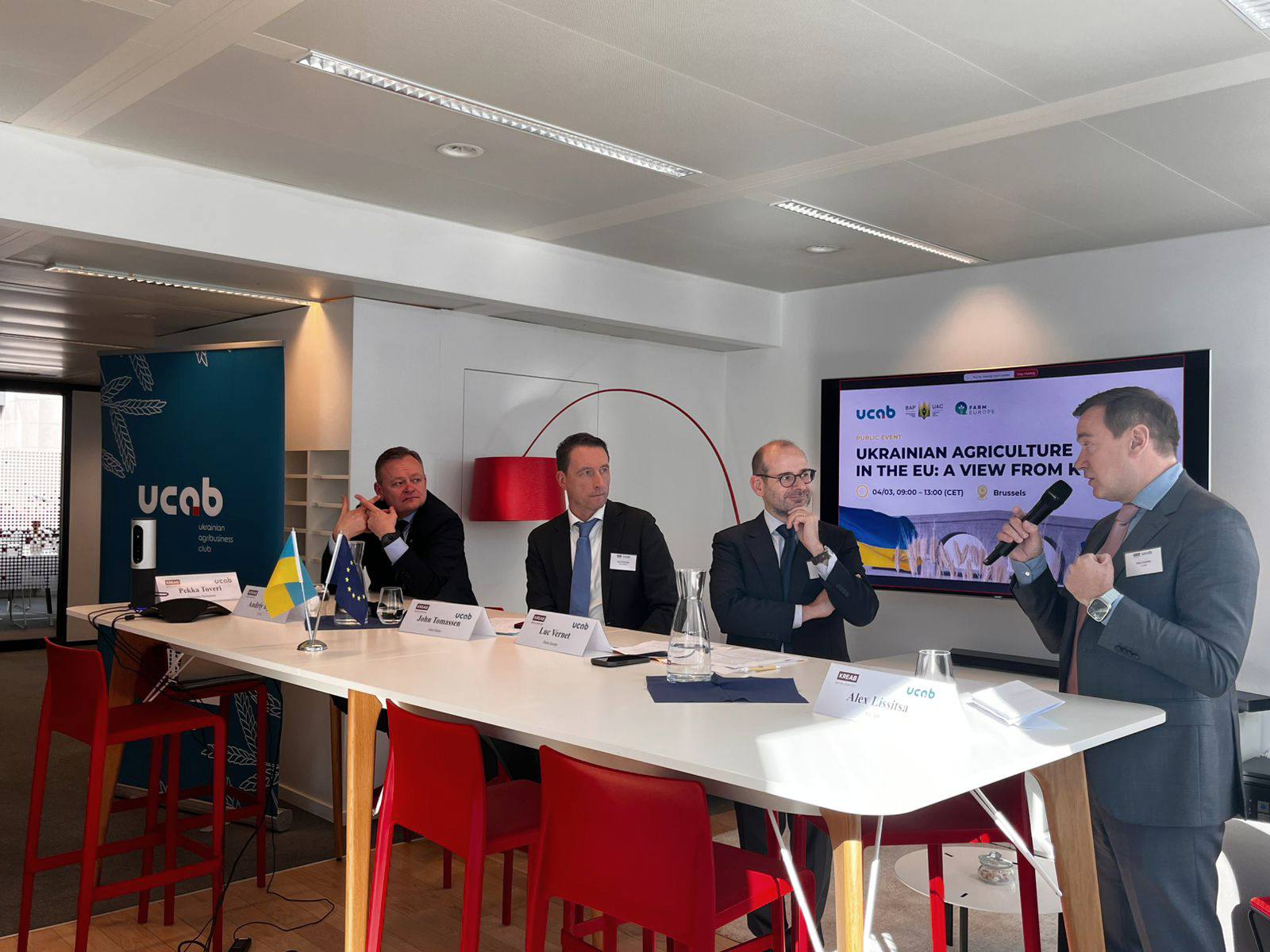
On 4 March in Brussels, during the event Ukrainian Agriculture in the EU: the View from Kyiv, organised by the Ukrainian Agribusiness Club (UCAB) jointly with the Ukrainian Agri Council (UAC), a Joint Position of Ukraine’s leading agricultural associations was presented, outlining the conditions for integrating the national agricultural sector into the European Union.
The document was prepared by sectoral associations representing the majority of Ukrainian agricultural producers: https://bit.ly/3Na87vw. Its central focus is the need to ensure a predictable, economically balanced and realistic transition of Ukrainian agriculture to EU rules and standards. To achieve this, the following is necessary:
1. A transition period of at least 10 years. Full harmonisation of Ukrainian standards with EU legislation requires time. The sector faces complex and capital-intensive changes: updating the list of permitted plant protection products and feed additives, implementing environmental requirements, regulating fertiliser use, adapting to GAEC standards and the Natura 2000 network. The transition period should begin from the date of Ukraine’s official accession to the EU.
2. CAP support. From the start of the transition period, producers should be able to benefit from support mechanisms under the EU’s Common Agricultural Policy (CAP) on the conditions applicable to Member States, with the possibility of phased increases in payments and fair capping of support. By the end of the transition period, the level of support should be aligned with that of other EU countries.
3. Access to EU structural funds. The transition will require large-scale investments in modernisation and infrastructure. The agricultural sector should receive financial support for this transformation, as was the case during previous waves of EU enlargement.
4. Liberalisation of trade with the EU market. Ukrainian products that are fully compliant with EU standards on safety, labelling and traceability should enjoy maximum liberalised access to the EU internal market. Exports to third countries may comply with national requirements, provided full transparency and labelling are ensured.
Andrii Dykun, Chairman of the UAC, drew attention to the catastrophic consequences of excessively rapid integration for the industry: “Small and medium-sized producers account for around 75% of Ukraine’s agricultural sector. Our farmers have been seriously weakened by years of war, and rushed integration could destroy a significant part of the sector. If that happens, the impact will go far beyond agriculture: it will affect rural employment, tax revenues, export earnings, and the overall economic resilience of Ukraine – precisely at a time when the country needs it most. If integration is not gradual and supported by realistic timelines and instruments, it will become economically burdensome rather than transformative.”
Oleksandra Avramenko, Head of the UCAB European Integration Committee, noted: “Ukrainian producers are structurally larger than most farms in the EU, which increases the risk of entering the accession phase without sufficient financial support precisely at the moment when investment needs will be at their highest. At the same time, we understand that the integrity of the EU Single Market is non-negotiable. Therefore, from the moment of accession, any product placed on the EU market will comply with European requirements, while products for third countries will be produced in accordance with national standards, remain fully traceable, and be clearly labelled as ‘products that do not comply with EU standards’.”
In turn, Alex Lissitsa, President of UCAB, emphasised that the proposed conditions protect not only Ukraine but also stabilise the European market: “A managed transition is a stabilisation instrument for the entire enlarged European agri-food system, protecting the integrity of the Single Market and European farmers themselves. For example, if Ukraine is forced to quickly abandon key plant protection products before alternatives become available, producers will begin purchasing permitted products in the EU. This may cause shortages and price increases on the EU market. To avoid this, we are proposing a partnership roadmap that includes joint research and scaling of alternative solutions, including Integrated Pest Management (IPM), exchange of experience with countries that have undergone this transition, and a coordinated position on simplifying excessive regulation within the CAP framework.”
The agricultural community once again emphasises that the Ukrainian agricultural sector unconditionally supports Ukraine's strategic course towards EU membership; however, integration must take place taking into account the structure of production, the scale of farms, and economic realities. We look forward to an open dialogue with our European colleagues, which will allow us to implement an integration format that is mutually beneficial for both Ukraine and the European Union, while preserving the production potential of both sides.
Wednesday, 4 March 2026