The Ukrainian Agri Council (UAC), within the framework of its strategic partnership development project in the seed sector implemented with support from the U.S. Government through the AGRO Program, conducted a study of the information needs of stakeholders in Ukraine’s seed market. The objective was to determine what information agricultural producers lack when selecting varieties and hybrids, which sources they trust, and what tools could improve decision-making during the growing season.
The survey involved 104 respondents from 19 regions of Ukraine, primarily representatives of micro, small, and medium-sized agricultural enterprises. The largest number of responses came from producers in the Vinnytsia, Poltava, Kirovohrad, Kharkiv, Odesa, and Mykolaiv regions, ensuring broad representation of the country’s key agricultural areas.
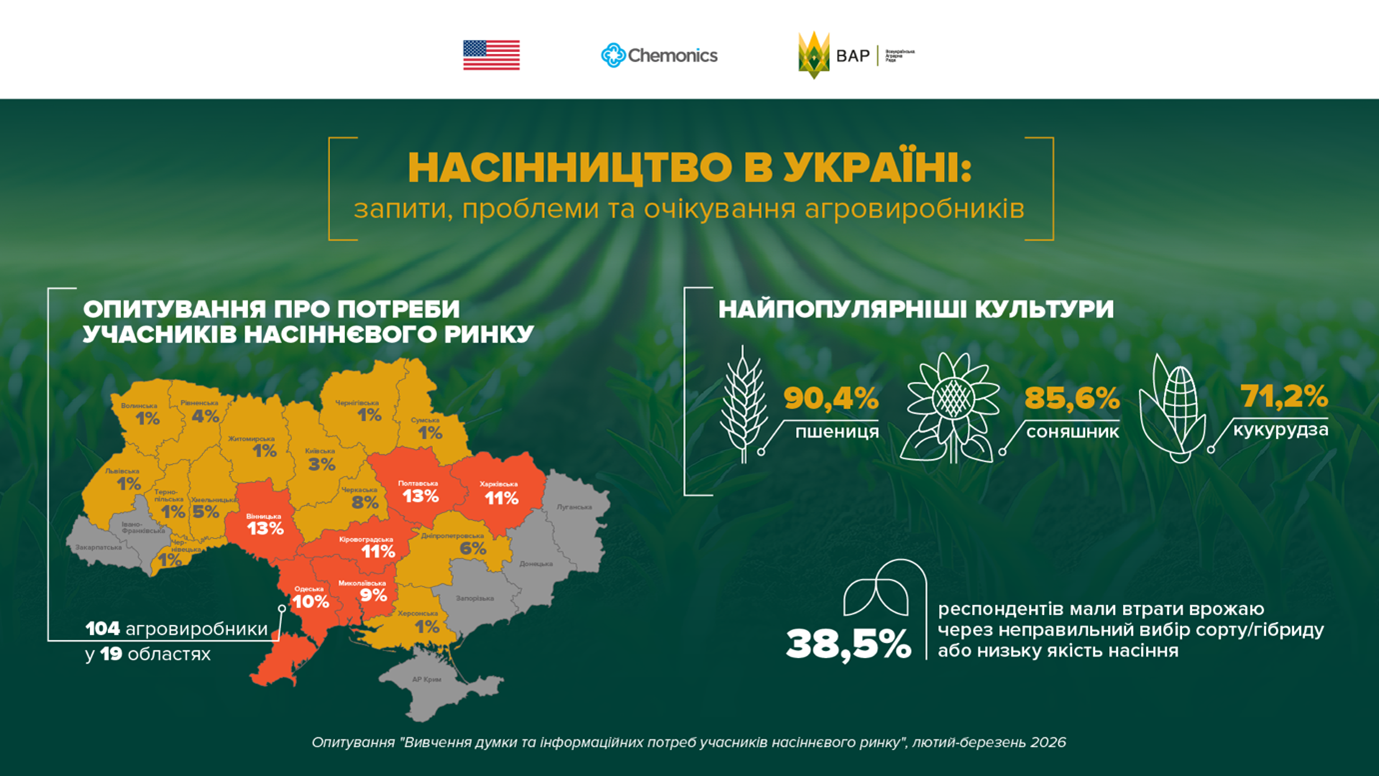
The overwhelming majority of respondents (83.7%) were seed consumers rather than seed producers and cultivated several crops simultaneously, including corn, wheat, sunflower, rapeseed, soybean, and barley. At the same time, one in three agricultural producers reported experiencing crop losses due to an incorrect choice of variety or hybrid, or because of unsatisfactory seed quality.
Among the key information needs identified by farmers when selecting a variety or hybrid, 76% ranked field and laboratory trial results as their top priority. Another 69.2% indicated a need for data on adaptability to the soil and climatic conditions of specific regions, while 62.5% sought agronomic recommendations for cultivation. Price information and supply conditions were important for 51% of respondents, and 38.5% were interested in information about new varieties and their characteristics.
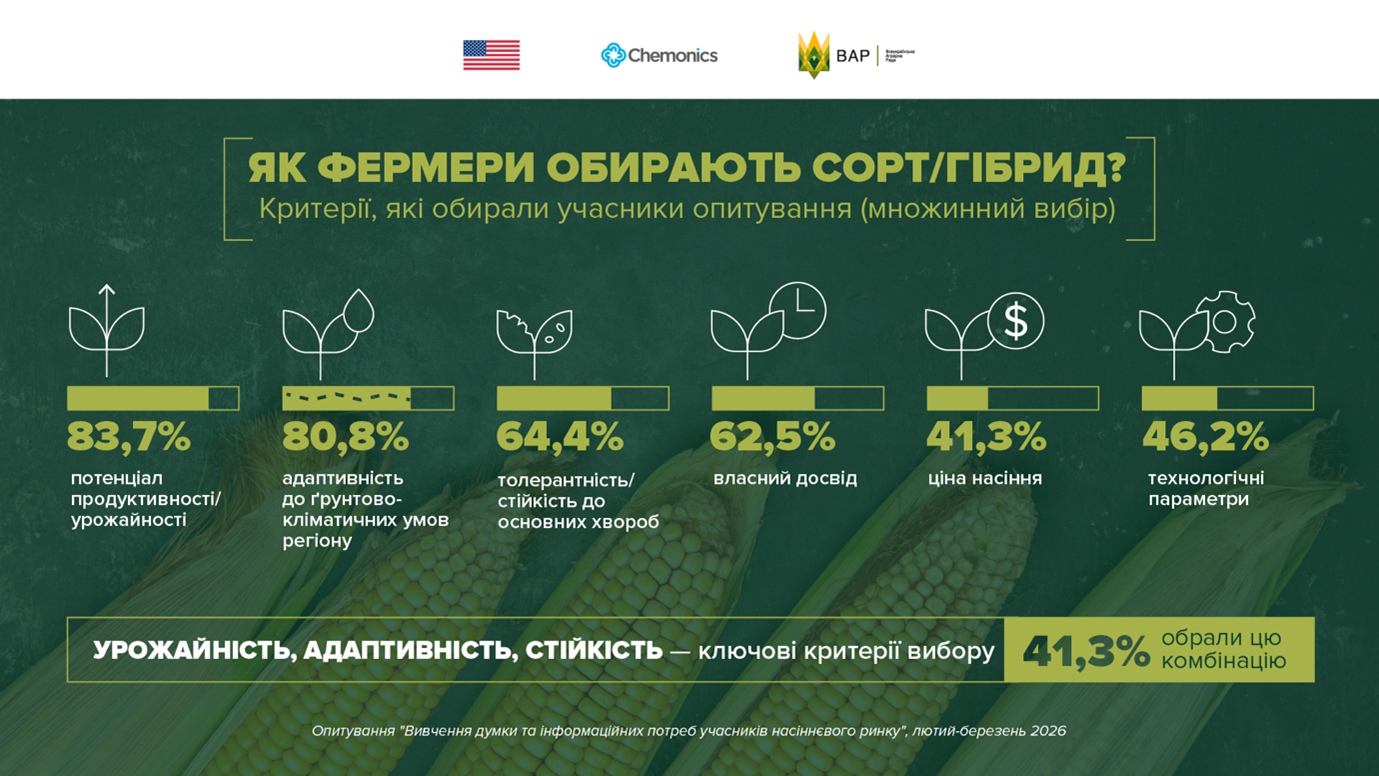
The study also showed that the most influential factors in seed selection are yield potential (83.7%), regional adaptability (80.8%), and disease resistance (64.4%).
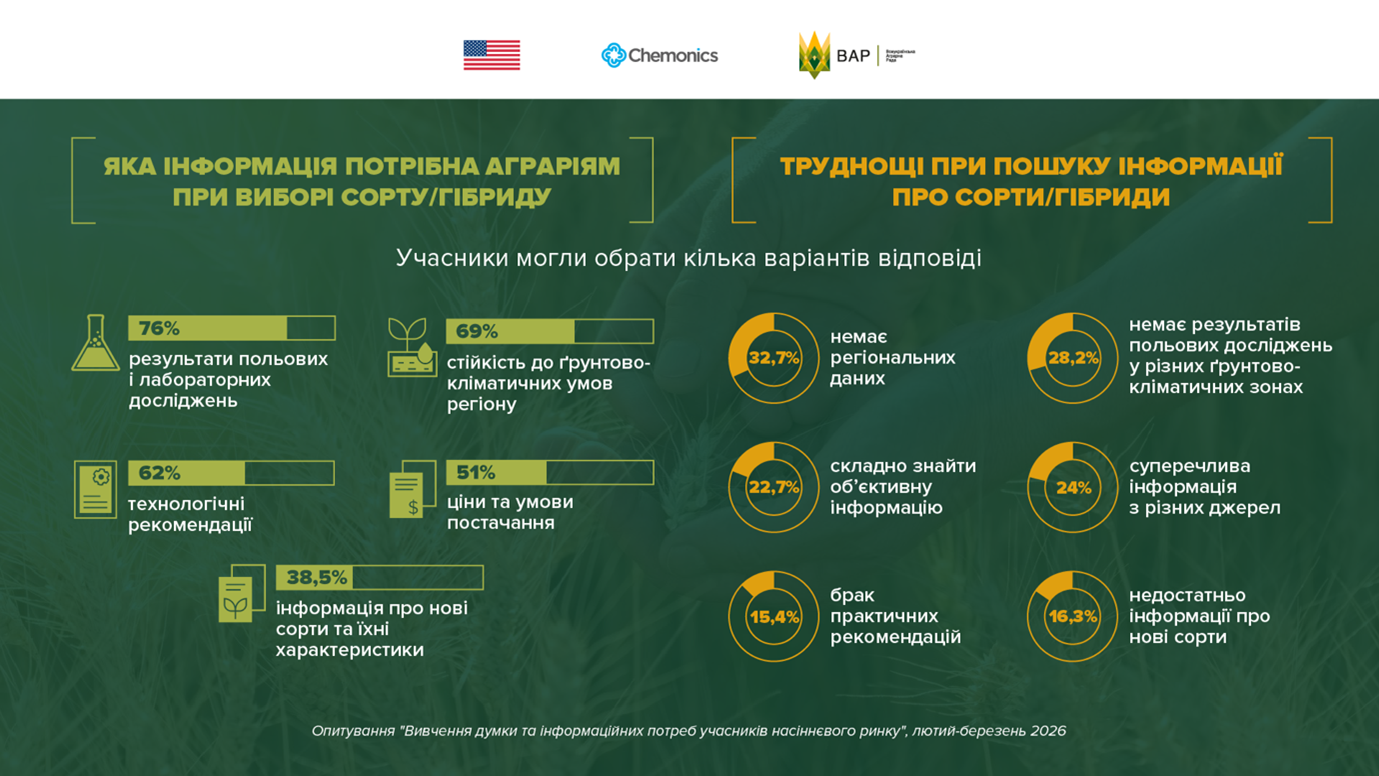
A separate section of responses highlighted a systemic challenge within the market — a shortage of independent regional information on the performance of varieties and hybrids across Ukraine’s diverse soil and climatic zones. Respondents identified the lack of such data as one of the main obstacles when choosing seeds.
"The survey results clearly show that Ukrainian agricultural producers need more than general marketing descriptions. They require access to independent field data verified under specific production conditions. Such information helps reduce risks, improve production efficiency, and support informed decisions when selecting seed material. The next stage of our work will focus on developing a convenient tool that will provide farmers with access to this information within a single digital environment," said Oleksandr Valebnyi, Coordinator of the Seed Sector Development Project.
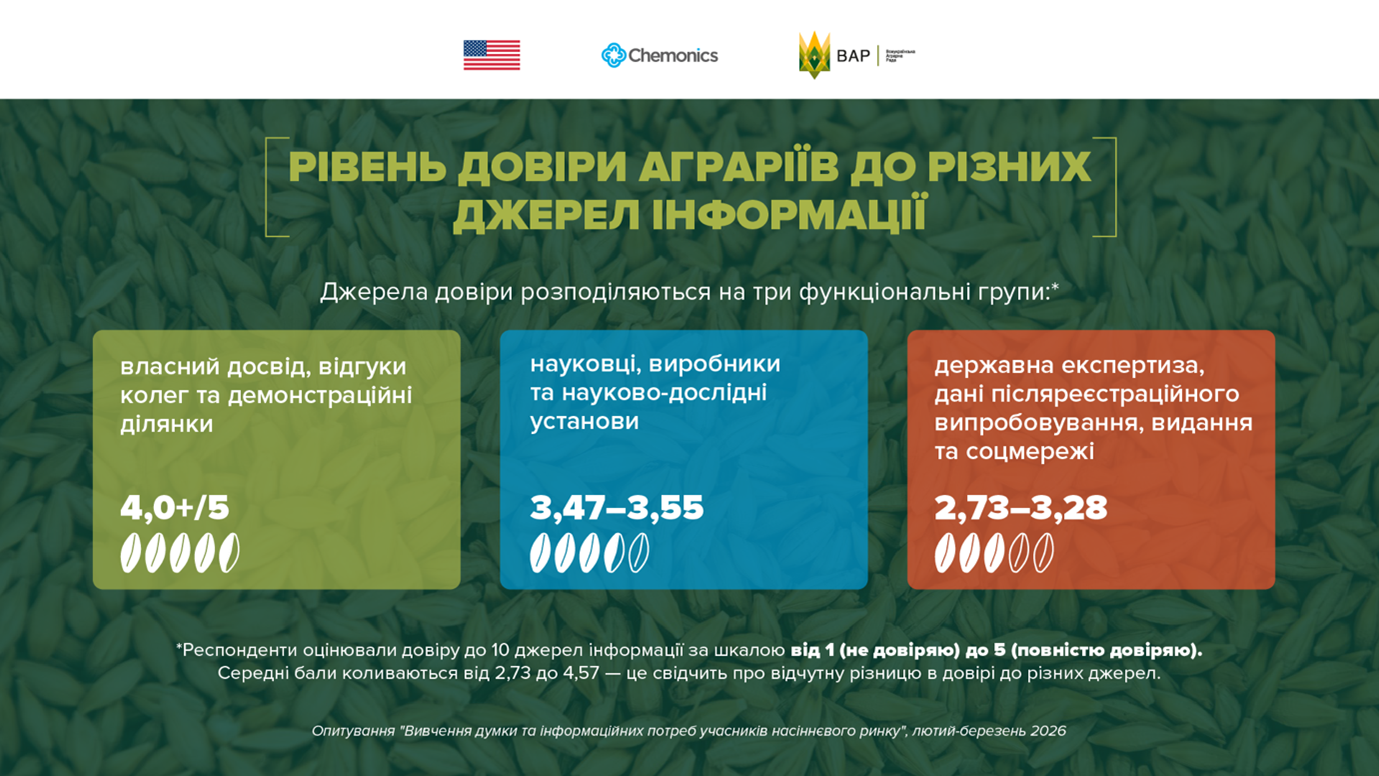
Another important finding of the study is that farmers place the highest level of trust in their own practical experience, recommendations from fellow producers, and the results of demonstration plots. This highlights the importance of strengthening systems for peer-to-peer knowledge exchange within the agricultural community.
The survey findings will serve as the foundation for the development of an industry-wide online platform featuring information on varieties, hybrids, field trial results, agronomic recommendations, and regional cultivation characteristics. The platform is expected to help Ukrainian micro, small, and medium-sized agricultural enterprises make more accurate and economically efficient decisions.
Tuesday, 5 May 2026