A roundtable discussion titled “The Future of Ukraine’s Agricultural Sector on the Path to the EU” was held in Kyiv, organized by the European Bank for Reconstruction and Development (EBRD).
During the event, participants discussed support instruments for Ukraine’s agricultural sector, as well as the future role of the EBRD and other European financial institutions in developing and strengthening Ukrainian agribusiness on its path toward EU membership.
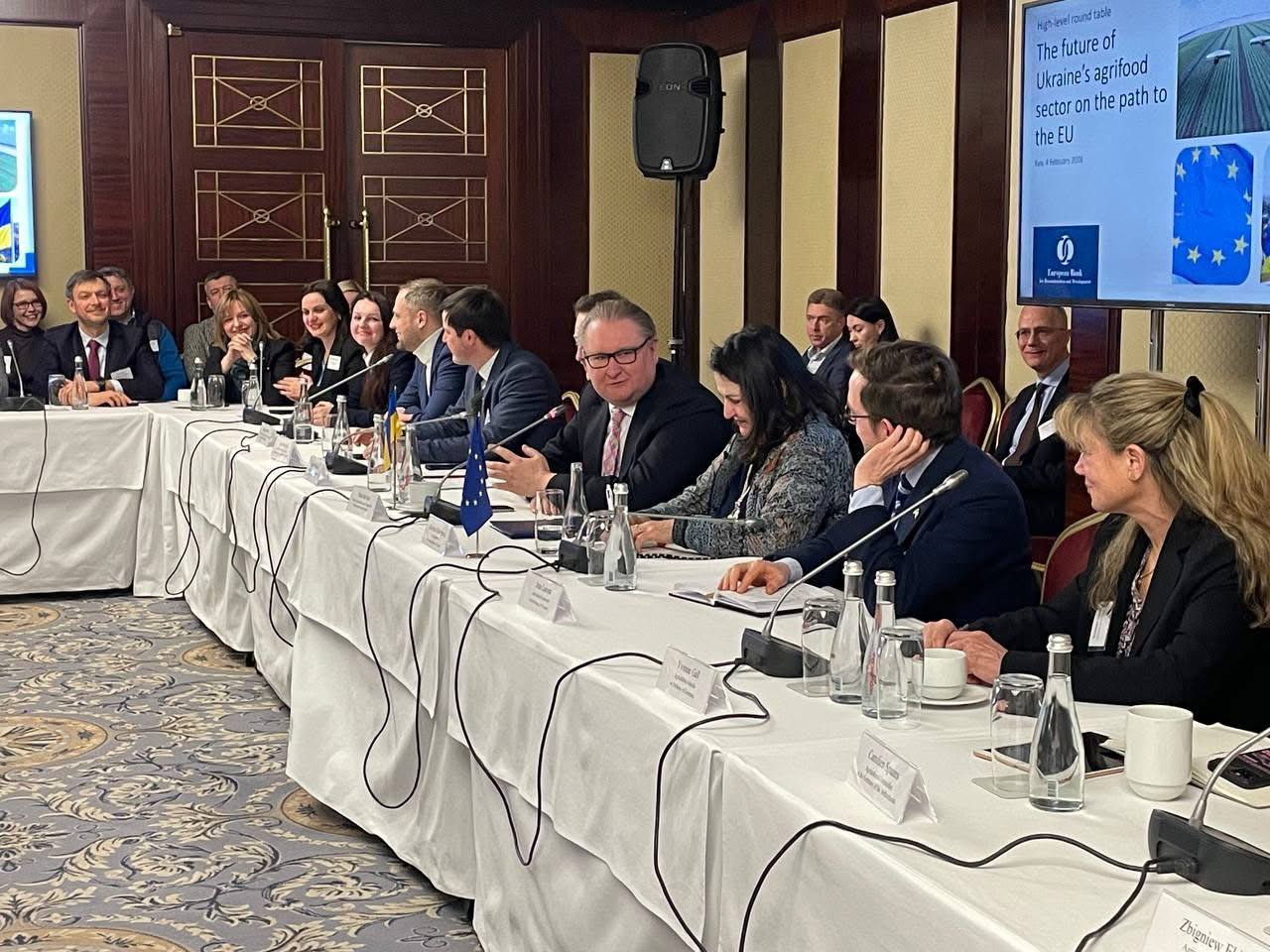
In his remarks, Andrii Dykun, Chairman of the Ukrainian Agri Council (UAC), emphasized that the integration of Ukraine’s agricultural sector into the EU requires clear economic calculations and a well-defined support model that takes into account the structure of production and the sector’s role in the national economy.
“Today, Ukraine does not have a clear understanding of how much funding is needed — both in terms of investments and subsidies — at the level of individual enterprises and the sector as a whole. At the same time, discussions are ongoing in the EU regarding limits on subsidy amounts per beneficiary. For Ukraine, this issue is critical. Farms cultivating about 80% of agricultural land could effectively be left without adequate state support and lose competitiveness in third-country markets. This would have catastrophic consequences not only for Ukraine’s agricultural sector but for the entire economy, since the sector’s share of GDP is not 1% as in EU countries, but 14%, and up to 20% including processing industries,” he stated.
The UAC Chairman also noted that European approaches to farm structure need to be adapted to Ukrainian realities, given the labor shortages in rural areas, demographic challenges, and the consequences of the war.
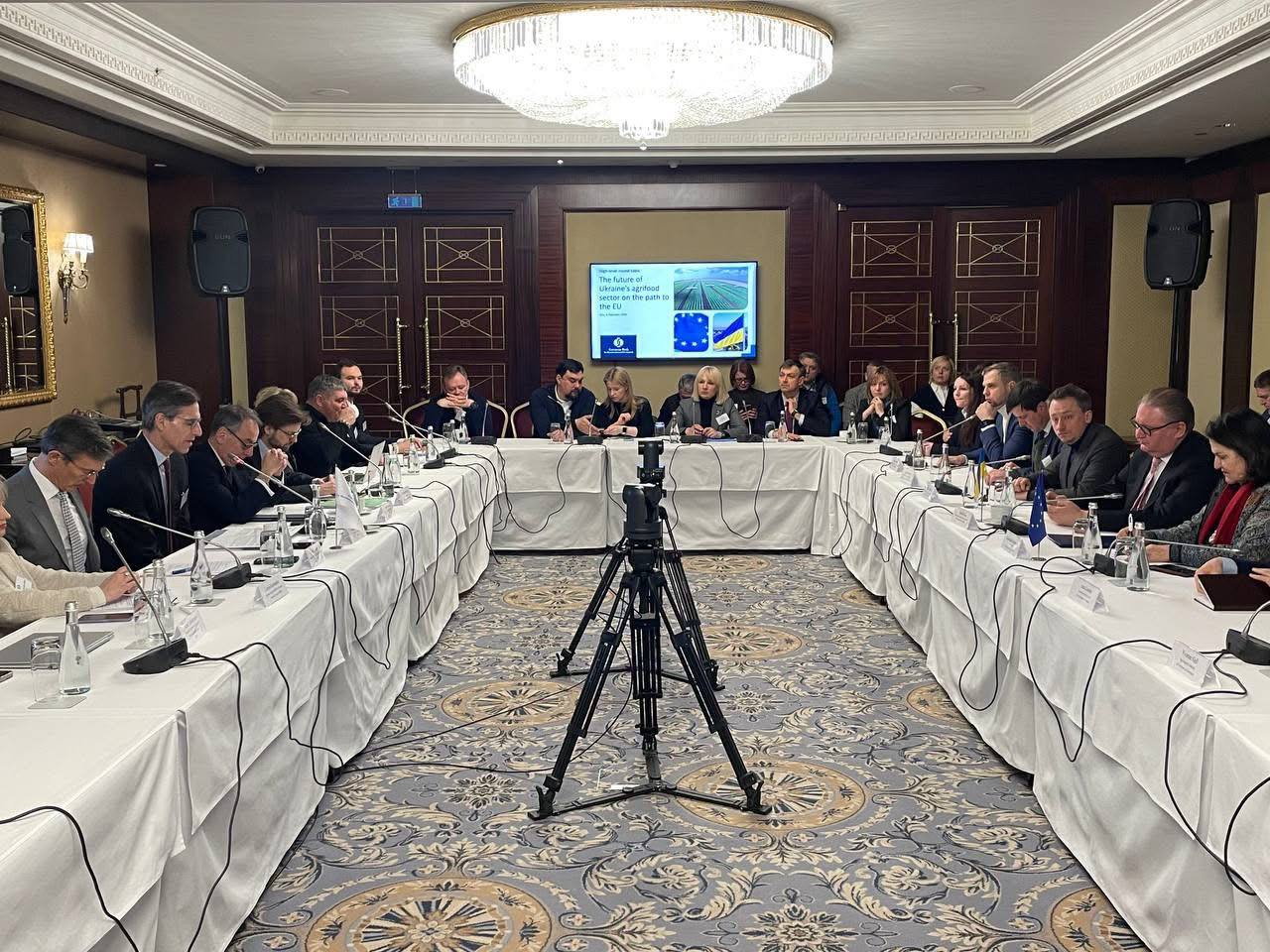
“The labor shortage problem is only worsening due to population aging, migration of economically active citizens to EU countries, and war-related losses. Therefore, to preserve rural communities, Ukraine must focus not on increasing the number of small farms, but on developing medium-sized farms by Ukrainian standards, which are capable of attracting and retaining workers through the introduction of modern technologies, increased labor productivity, and higher wages,” Andrii Dykun added.
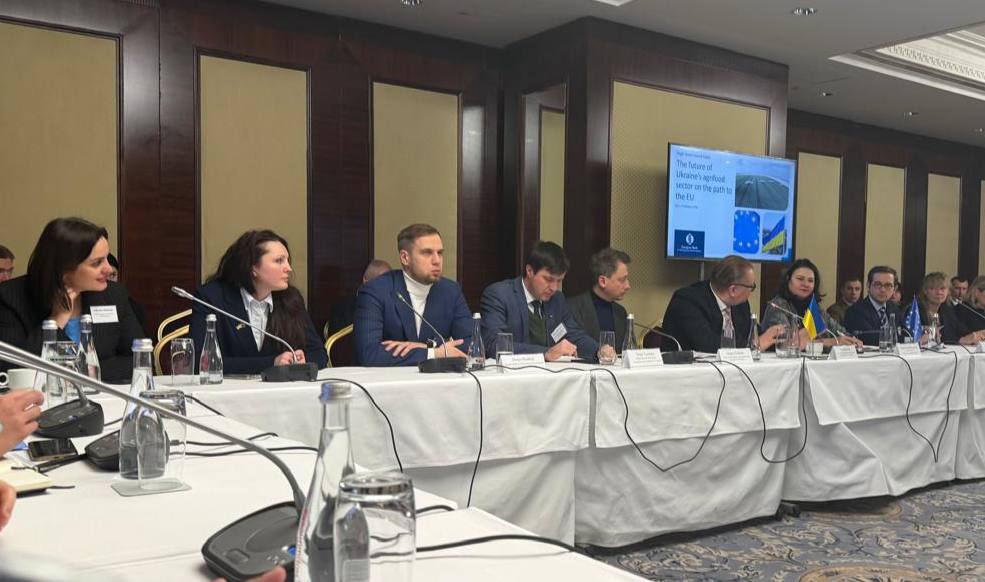
Participants in the roundtable included Taras Kachka, Deputy Prime Minister for European and Euro-Atlantic Integration of Ukraine, Oleksii Sobolev, Minister of Economy, Environment and Agriculture of Ukraine, Katarína Mathernová, Ambassador of the European Union to Ukraine, Gregory Guyett, First Vice President of the EBRD, as well as representatives of Ukrainian agricultural associations and sector experts.
Wednesday, 11 February 2026